
Bread on a Galilean Shore
by Kelly Joy·
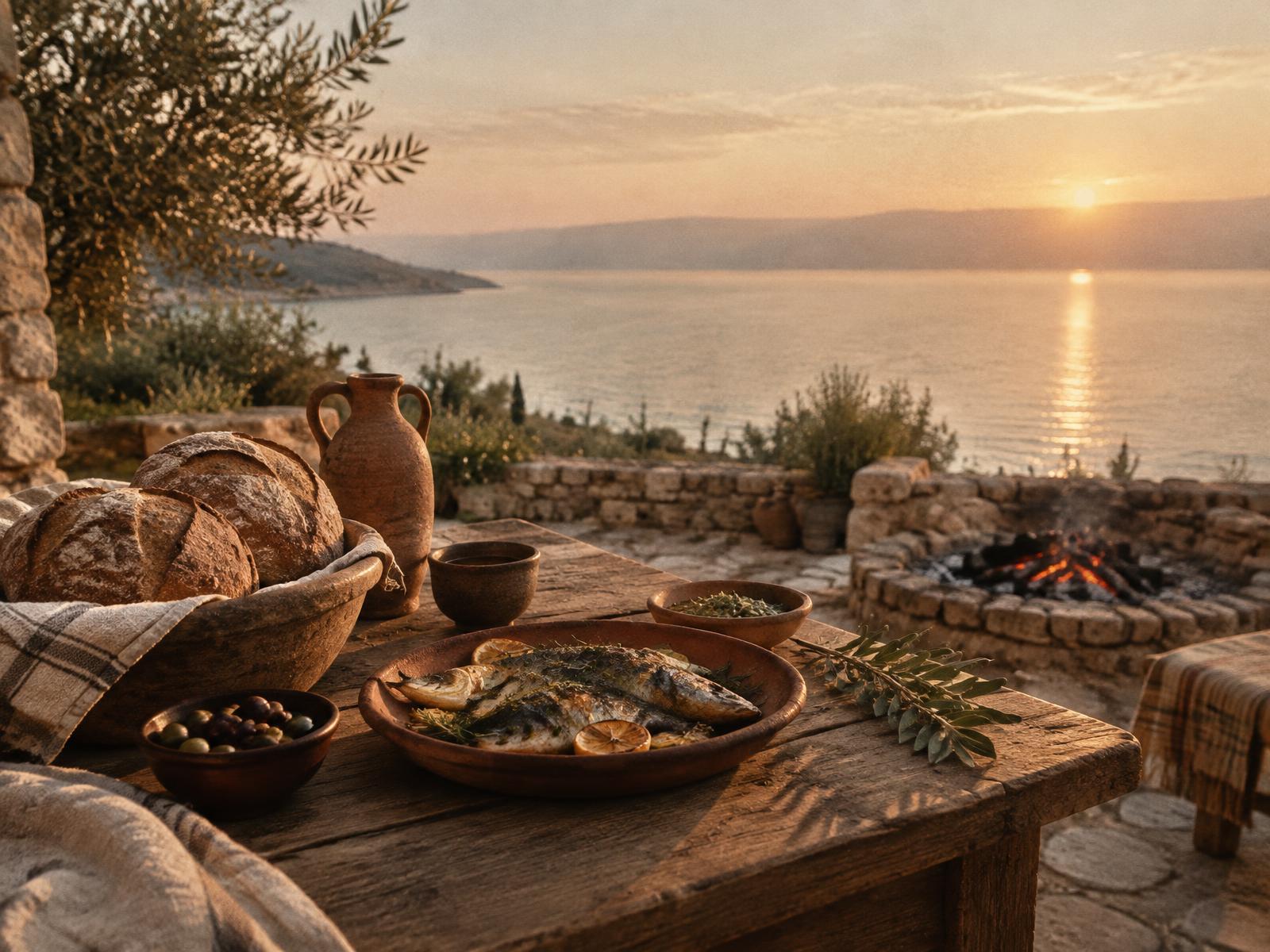
There is a moment in the Gospel of John that I return to again and again. The disciples have been out all night on the water. They are tired, unsure of what comes next, and carrying the weight of everything that has happened. And there, on the shore, is Jesus — standing beside a charcoal fire, cooking breakfast.
"Come and have breakfast." — John 21:12
No sermon. No lecture. Just bread and fish, warm from the coals, offered to friends who had failed Him and followed Him in equal measure.
The table comes first
What moves me about this story is the order of things. Jesus does not begin with questions or corrections. He begins with breakfast. The restoration of Peter — the conversation about love and lambs and calling — happens after the meal, not before it.
I think we often get this backwards. We wait until we feel ready, worthy, or put-together before we come to the table. But the table is not the reward for arriving. It is the place where arriving becomes possible.
What breakfast on the shore teaches us
- Grace is practical. It smells like smoke and tastes like bread. It meets us in our hunger, not just our holiness.
- Hospitality is holy. Someone built the fire. Someone cooked the fish. Small, ordinary acts of care are never small to the one who receives them.
- Failure is not final. Peter had denied Jesus three times — and Jesus answered with a meal and a mission.
An invitation
Maybe you are coming in from a long night on the water. Maybe you are tired, or unsure, or carrying more than you let on. Hear the invitation the disciples heard: come and have breakfast.
There is bread on the fire. There is a place set for you. And the One who set it has been waiting on the shore longer than you know.
Kelly Joy